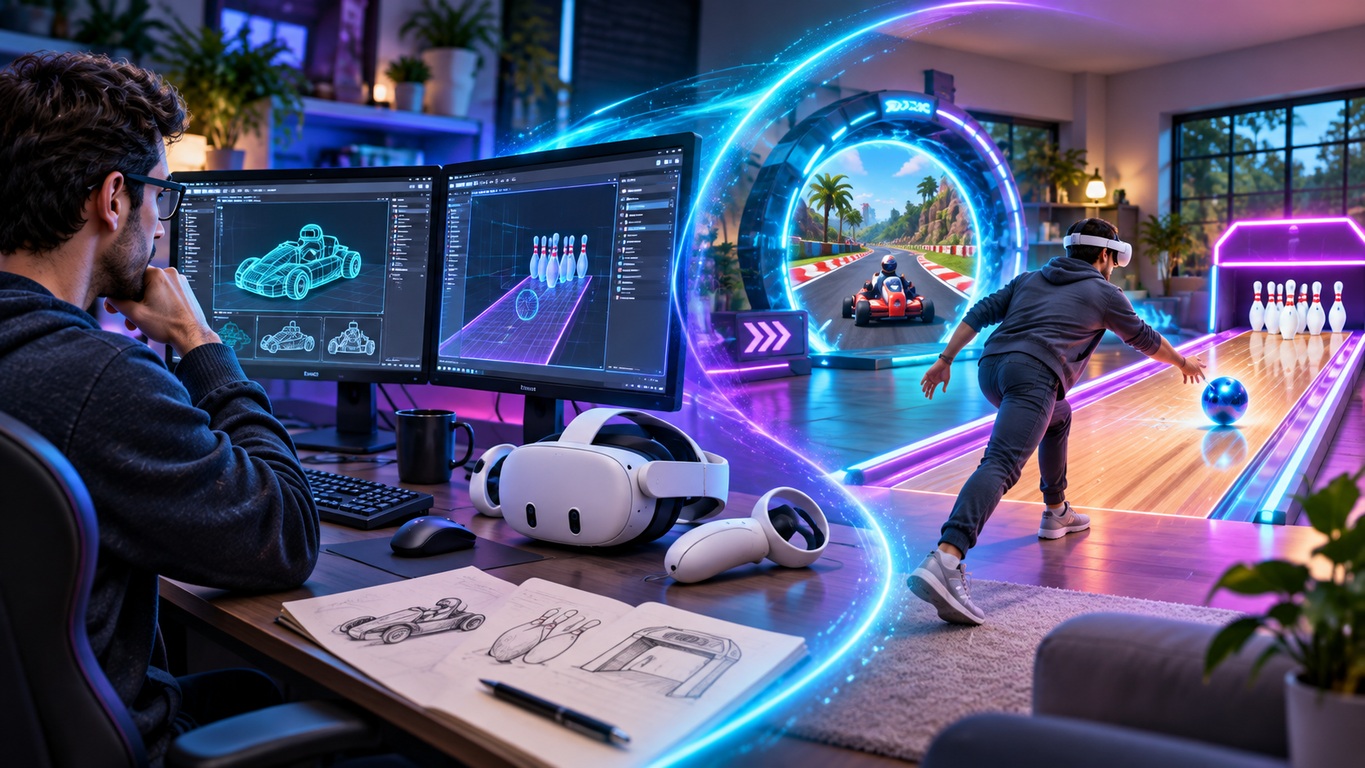
Why does a virtual bowling ball knock down pins, while a kart feels different through a tight corner and a long straight? The answer is partly VR game physics: software that determines how digital objects move, collide and respond. But a convincing game is not necessarily a perfect copy of real-world physics.
On Meta Quest 3 and 3S, well-designed movement needs to feel readable and responsive as well as believable. Here's how the principles work, with examples from Tenpin bowling and Turbo Tracks racing in Nexus Arcade.
1. What Does a Physics Engine Actually Do?
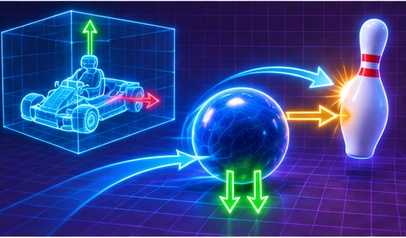
In a physics-driven game, objects can have properties such as position, speed and mass. A collider defines a shape the game can use to detect contact. A physics simulation then works out what should happen when objects move or meet.
Gravity can pull a ball down; friction can slow its travel; collision rules can make pins tip and scatter. Developers may combine these calculations with carefully designed behaviours rather than simulating every detail of a real bowling alley or motor vehicle.
Unity's 3D physics documentation explains how settings affect accuracy and performance. The player's experience matters more than whether every physical value is identical to real life.
2. Bowling Begins with the Release of the Ball
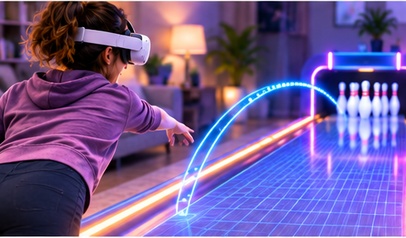
In physical bowling, the direction, speed and rotation of a ball influence where it travels. A virtual game can use controller movement and release timing to create a similar relationship. It may also tune the result so throws remain comfortable and understandable.
Meta's throwing sample for Quest demonstrates configurable velocity, spin, gravity and custom bowling-ball behaviour. These are general development techniques, not a claim about Nexus Arcade's exact implementation.
In Nexus Arcade Tenpin, you pick up a virtual ball, aim down the lane and release it. Try a controlled, repeatable motion before changing your aim. Your real controller is not a heavy bowling ball, so avoid exaggerated swings.
3. Why Pin Collisions Make Each Throw Interesting
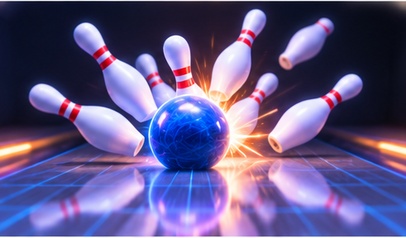
When a bowling ball reaches the pins, a game needs to recognise contact and produce an understandable reaction. A physics-based setup may calculate how energy and momentum are transferred, while the game's rules decide which pins count as fallen and when the lane resets.
Small differences in the ball's approach can change the visible result. A direct hit and a glancing hit should not necessarily behave alike. This makes another attempt meaningful: you can watch what happened and adjust instead of repeating the same throw blindly.
However, virtual pins have no physical weight in your hand, and developers may tune collisions for fun or consistency. For more about the experience rather than the technology, read our mixed-reality bowling guide.
4. Kart Racing Depends on Steering, Grip and Braking
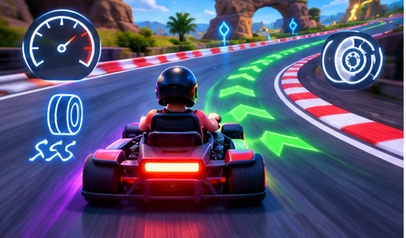
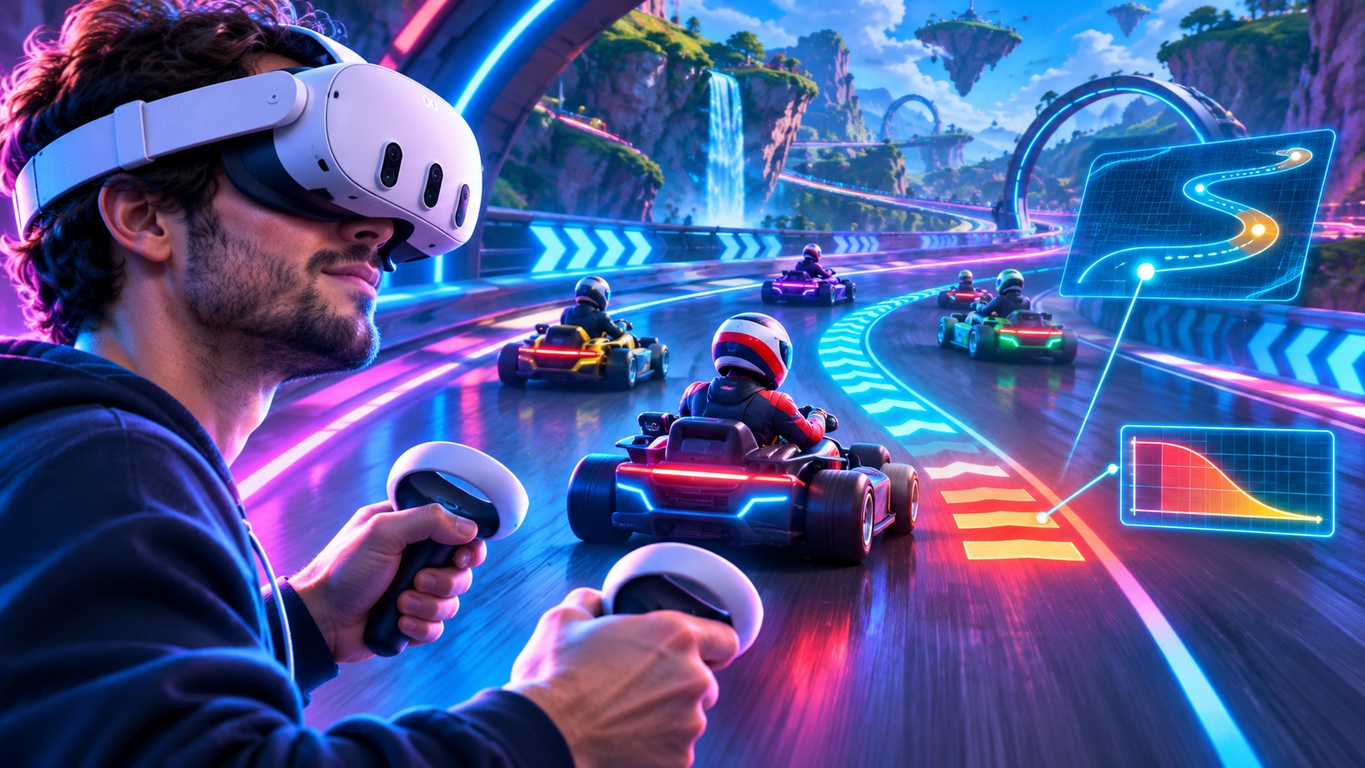
Driving is another kind of physics problem. A racing game has to translate steering, acceleration and braking into movement that feels consistent. Developers can model forces, traction and turning response, then tune the result for arcade handling or detailed simulation.
When a kart approaches a sharp bend too quickly, turning alone may not be enough to keep an ideal line. Slowing before the corner and accelerating as the road opens up can make a smoother run. The principle is useful even in an arcade game with simplified vehicle behaviour.
Turbo Tracks lets players race on virtual courses accessed from the mixed-reality arcade. Experiment with how early you prepare for corners. For a separate look at computer-controlled rivals, see how racing AI opponents work.
5. Realism Also Comes from Feedback, Not Just Calculations

A technically accurate collision can still feel flat if its timing or presentation is confusing. Sound, visual effects, animation and clear score feedback help players understand that an action had a result. The trick is to make those cues agree with the motion on screen.
In bowling, you want to recognise when the ball reaches the pins. In racing, you need to judge speed and the approach of a bend. Delayed or inconsistent feedback makes both tasks harder, even if the underlying calculations are complex.
That is why believable gameplay is not always maximum realism. An arcade experience can simplify the simulation to deliver clearer controls and more enjoyable repeat attempts. Different games make different choices, and the best result is the one that communicates its rules well.
6. Why Smooth Physics Matters on Standalone Quest
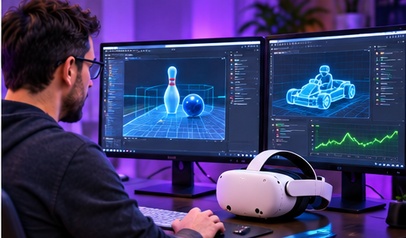
On a standalone headset, physics calculations share processing resources with graphics, tracking, audio and gameplay. Many engines update the simulation at a fixed interval while images are rendered separately. If the timing is poorly managed, moving objects may appear to stutter.
Unity documents techniques such as selecting an appropriate physics update interval, simplifying collision work and smoothing motion between updates. More detailed calculations are not automatically better if the game becomes less responsive.
These are practical challenges for XR teams. Nexus Dev Studio, the team behind Nexus Arcade, develops VR and mixed-reality experiences where interaction design and testing on the intended headset are important to the result.
Good game physics turns a controller action into something you can understand, predict and improve. In bowling that means learning from a throw; in racing it means finding a cleaner line through a corner. Neither experience has to duplicate every detail of the physical world to be enjoyable.
Want to try both styles of play? Download Nexus Arcade free on the Meta Horizon Store for Quest 3 and Quest 3S, then explore Tenpin, Turbo Tracks and the other arcade experiences.